


Why Creators Are Moving Away from Cinematic AI Motion Tools
- AI Video
- AI Video Generator
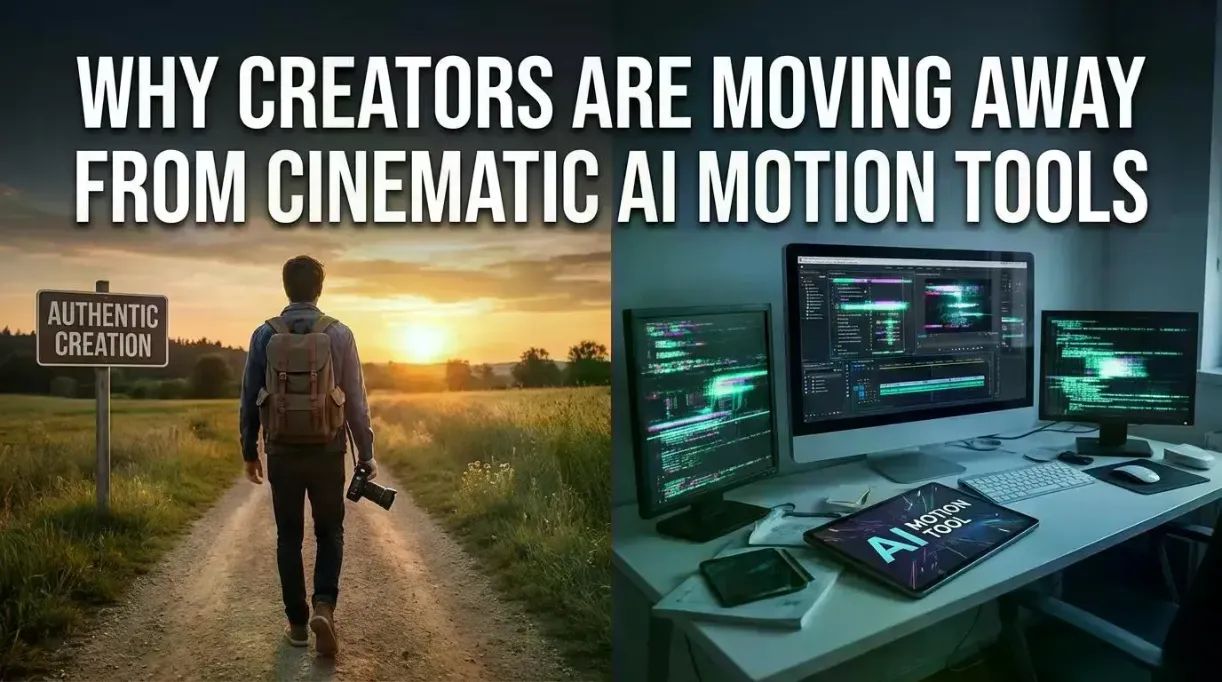
For the past few years, cinematic-quality AI motion has been treated as the ultimate benchmark in AI video generation.
More realistic movement, more complex motion paths, and more expressive animation were often seen as clear signs of progress.
But in 2026, a noticeable shift is happening.
Many creators are no longer prioritizing cinematic AI motion quality — not because it lacks technical merit, but because it no longer aligns with how content is actually produced.
This article explains why creators are moving away from cinematic AI motion tools, what they are optimizing for instead, and how AI motion is being redefined in real-world workflows.
Direct Answer: Why Are Creators Moving Away from Cinematic AI Motion Tools?
Creators are moving away from cinematic AI motion tools because speed, cost efficiency, and repeatability matter more than maximum motion realism in real content workflows.
While cinematic motion tools can produce impressive results in controlled scenarios, they often struggle to scale for frequent, deadline-driven content creation.
What “Cinematic AI Motion” Really Means
Cinematic AI motion tools are typically designed to push motion quality as far as possible.
They often emphasize:
- complex body movement and articulation
- expressive motion sequences
- detailed simulation and realism
- visually impressive, demo-ready outputs
This approach is valuable for experimentation and exploration.
However, it also comes with trade-offs that become more visible outside of demo environments.
Cinematic motion is not inherently “better” — it is simply optimized for a different goal.
Why Cinematic Motion Tools Don’t Scale Well
As AI video tools move from experimentation to production, creators start encountering limitations that cinematic motion systems were not designed to solve.
High Iteration Cost
Cinematic motion often requires longer generation times and more careful setup.
This makes rapid iteration difficult when multiple versions are needed.
Unpredictable Time-to-Usable Output
Even when a tool produces high-quality motion, it may take several attempts to achieve a stable, publishable result.
For production workflows, unpredictability becomes a major bottleneck.
Retry Frequency Breaks Workflows
In practice, the cost of AI motion tools is not measured per generation, but per usable output.
High retry rates significantly increase both time and budget requirements.
Cost Grows with Volume
What feels acceptable for a single clip quickly becomes expensive when scaled across dozens or hundreds of videos.
These factors make cinematic motion tools difficult to integrate into everyday content pipelines.
What Creators Actually Optimize For in 2026
As content volume increases, creator priorities have shifted.
Instead of asking, “Which tool produces the most impressive motion?”, creators are asking:
- How fast can I get a usable result?
- How consistent are the outputs across runs?
- How much does each finished video really cost?
- Can this tool support a repeatable workflow?
This shift reflects a broader change in how AI tools are evaluated:
production efficiency now outweighs peak visual quality.
The Rise of Practical Motion Tools
In response to these needs, a new category of AI motion tools has emerged.
Practical motion tools are typically characterized by:
- avatar-first or content-first design
- template-based workflows
- faster generation times
- predictable and stable outputs
- optimization for social, marketing, and educational formats
Rather than pushing motion complexity to its limits, these tools focus on what works reliably in real-world use cases.
Where Tools Like DreamFace Fit
Tools like DreamFace reflect this shift toward practical motion creation.
Instead of emphasizing cinematic experimentation, they focus on:
- motion that looks natural and publishable
- workflows designed for repetition and scale
- faster iteration cycles
- lower cost per usable result
For many creators, this approach aligns more closely with how AI video is actually used today.
Who Still Needs Cinematic AI Motion Tools
The move away from cinematic motion does not mean these tools are obsolete.
They remain valuable for:
- research and experimentation
- one-off cinematic projects
- creative exploration without strict constraints
However, these use cases represent a narrower segment of the creator landscape than before.
AI Motion Is Shifting from Spectacle to Utility
The evolution of AI motion mirrors a familiar pattern in technology.
Early stages focus on what is possible.
Mature stages focus on what is usable.
As AI video becomes part of everyday content creation, motion quality alone is no longer the defining factor.
Consistency, speed, and workflow integration are taking its place.
Key Takeaway
AI motion is no longer about producing the most impressive demo.
It is about producing usable videos — consistently, affordably, and at scale.
This is why many creators are moving away from cinematic AI motion tools and toward practical solutions that fit real workflows.
For creators exploring how practical motion tools work in real production scenarios, examples and workflows can be found across modern AI avatar platforms.
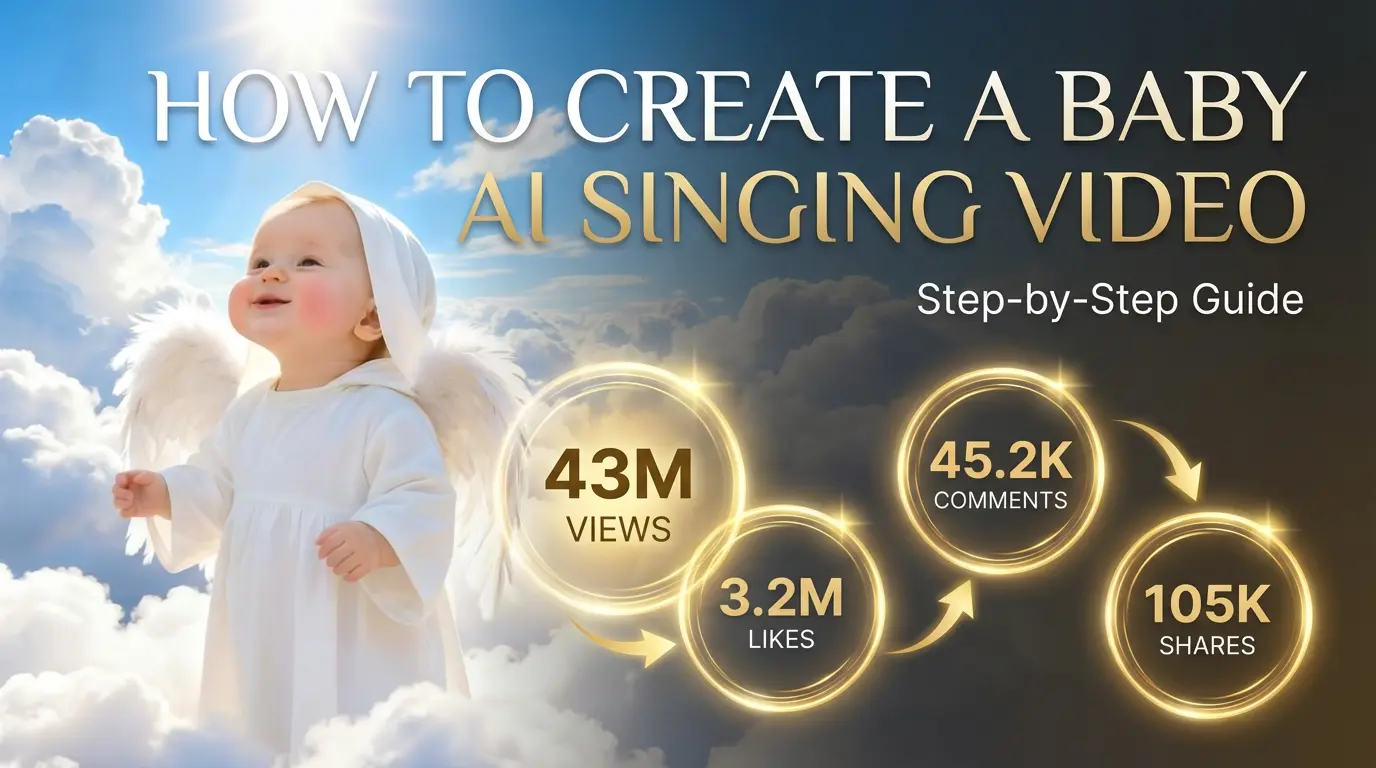
How to Create a Baby Angel AI Singing Video
A baby angel AI singing video is created by animating a photo with AI-powered lip sync and gentle singing audio. To create this type of video, users upload a clear image, add a soft vocal track, and generate facial animation that matches pitch and rhythm. Angel-themed AI singing videos are popular on platforms like Facebook Reels because their calm, emotional visuals encourage replays and sharing.
By Brayden 一 Jan 12, 2026- Photo Animation
- AI Video
- Avatar Video
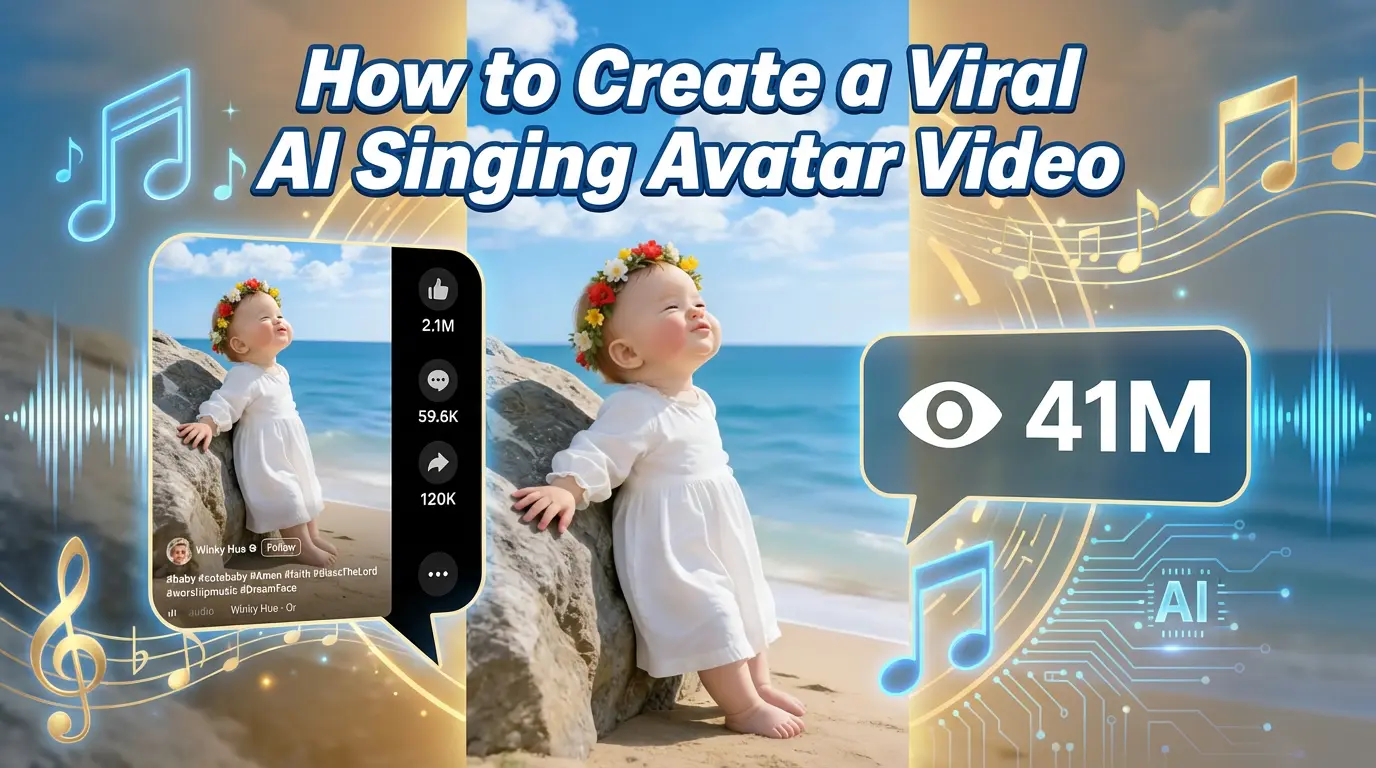
How to Create a Viral AI Singing Avatar Video
An AI singing avatar video is created by animating a photo with AI-powered lip sync and singing voice generation. To create a viral AI singing avatar video, users upload a clear image, add a singing audio source, and generate facial animation that matches pitch and rhythm. This type of content has become especially popular on social platforms like Facebook Reels, where expressive and unexpected visuals drive engagement.
By Brayden 一 Jan 12, 2026- Photo Animation
- AI Video
- Avatar Video
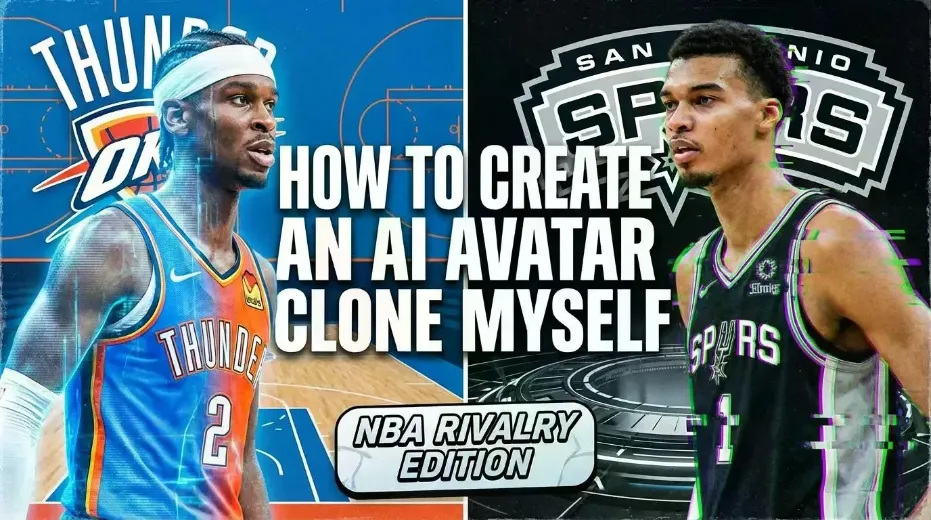
How to Create an AI Avatar and Clone Myself
Creating an AI avatar and cloning yourself means generating a digital version of your face and voice that can speak and appear in videos using AI. To create an AI avatar, users typically upload a clear photo, add text or a short voice sample, and generate a talking avatar with synchronized lip movement and facial expressions. In 2026, AI avatars are widely used for content creation, personal branding, and social media — similar to how games like NBA 2K allow players to scan their faces and create digital identities.
By Brayden 一 Jan 12, 2026- AI Video
- Avatar Video
- NBA
- Image-to-Video
- X
- Youtube
- Discord