


AI Image Colorization: GPT-4o vs. Dream Image
- AI image generator
- GPT-4o Image
- Dream Image
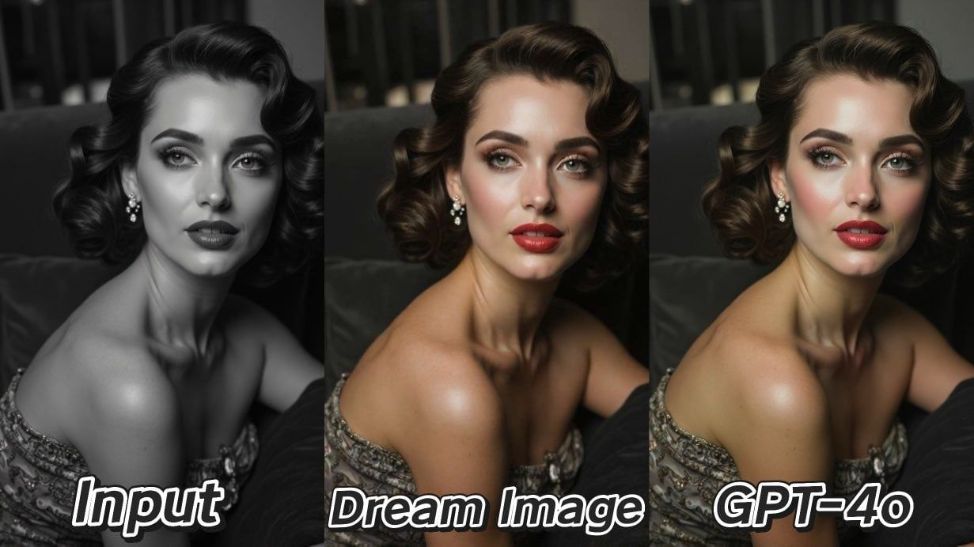
Bringing black and white photos to life is one of the most magical applications of AI. With a single click, decades-old memories or artistic monochrome shots can be filled with realistic color. But not all AI tools are created equal. We put two leading models, GPT-4o and Dream Image, to the test with a simple but challenging prompt: "Colorize this black and white photo realistically." Here’s an objective look at how they performed.
We used three distinct black and white portraits to evaluate each model's ability to interpret light, shadow, and texture to produce realistic and compelling colors.
Test 1: The Vintage Glamour Portrait
For this classic, high-contrast studio portrait, the results were impressive across the board.
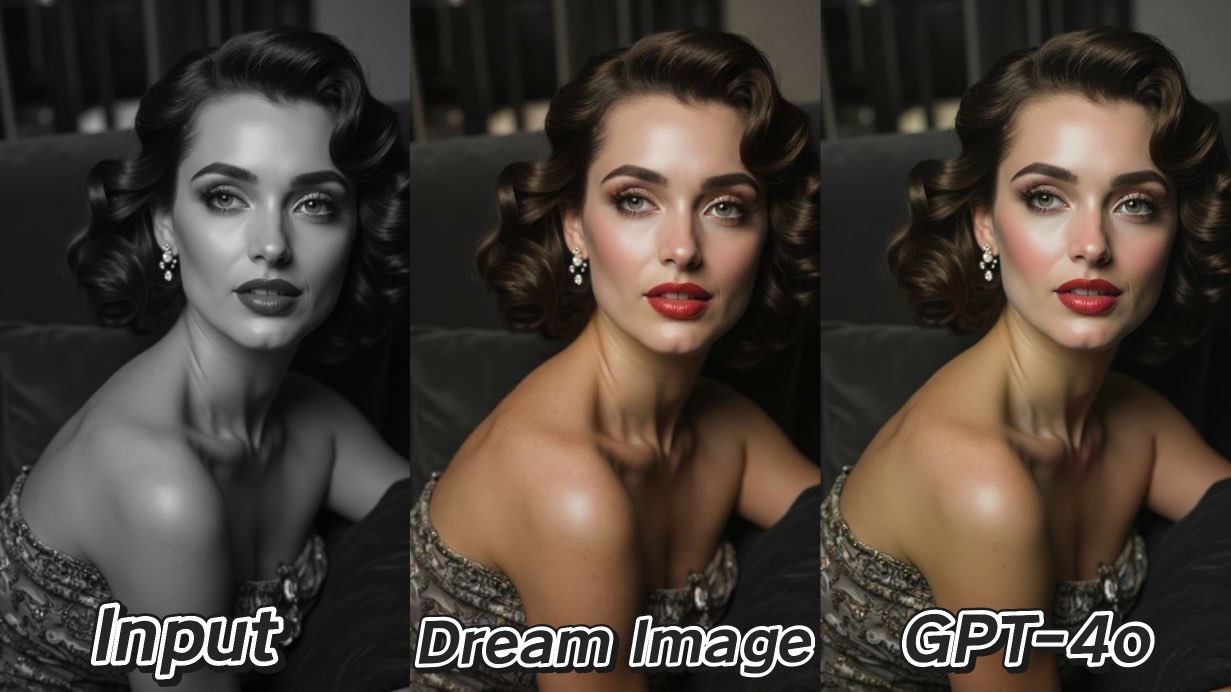
Dream Image & GPT-4o: Both models produced stunning, nearly indistinguishable results. They accurately rendered the warm skin tones, the bold red lipstick, and the intricate details on the dress. If we look closer, GPT-4o offers slightly more subtle gradations in the skin highlights, while Dream Image delivers a vibrant, clean look. For this type of image, both are top-tier.
Test 2: The Pensive Window Shot
This test, featuring soft, diffused window light, revealed a key difference in each model's approach.
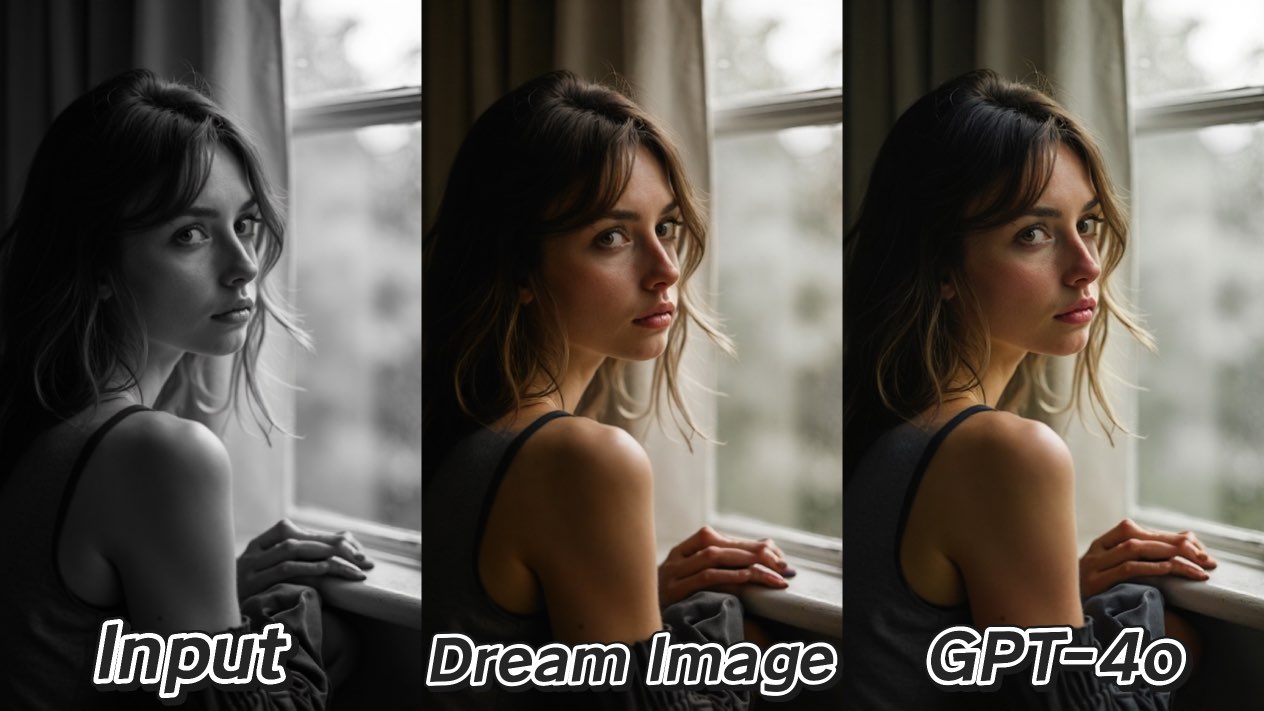
Dream Image: Produced a beautiful image with warm, saturated skin tones, giving the scene a cozy, "golden hour" glow. While aesthetically pleasing, it’s a more artistic interpretation that adds warmth not necessarily present in the original.
GPT-4o: Opted for a more subdued and cooler palette. The paler skin tones feel more faithful to the soft, overcast light suggested by the original black and white photo. This result leans more heavily towards strict photorealism.
Test 3: The Rainy Day Smile
This modern, outdoor photo of a woman smiling under an umbrella presented another challenge.
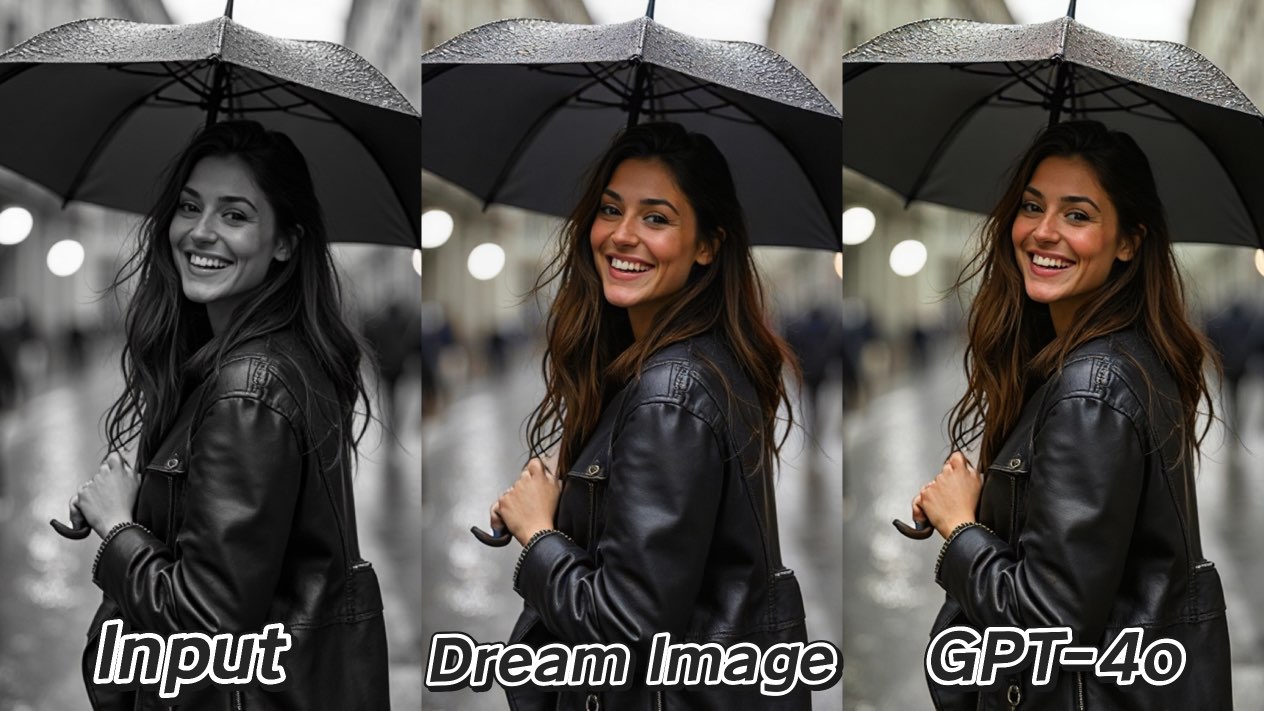
Dream Image & GPT-4o: Once again, both models knocked it out of the park. They generated color photos that look completely natural, as if they were never black and white. They expertly handled the warm skin tones against the cool, rainy background and the texture of the leather jacket. It is nearly impossible to pick a favorite.
The Verdict: Realism or Artistic Flair?
Both GPT-4o and Dream Image are exceptional tools for AI photo colorization. They can produce breathtakingly realistic results in seconds.
The primary difference lies in their interpretation. GPT-4o consistently prioritizes photorealism, carefully analyzing the original image's lighting to create a faithful color representation. Dream Image delivers equally high-quality results but is sometimes willing to take artistic liberties, enhancing the image with a warmer or more vibrant palette to create a visually striking photo.
Your choice depends on your goal. For strict historical accuracy, GPT-4o may have the edge. For creating a beautiful image with guaranteed vibrancy, Dream Image is a formidable and equally powerful contender.
What Is a Good Prompt for an AI Image?
Learn how to write better AI image prompts that generate high-quality, consistent, and creative results. Discover examples, best practices, and common mistakes to avoid.
By Easton 一 Jul 14, 2025- AI image generator
- Text-to-Image
- AI Image
Illustrious‑SDXL: Anime‑Focused Image Generation Elevated
Introducing Illustrious‑SDXL — a model finetuned for anime and stylized illustration generation. It blends SDXL’s robust architecture with curated anime datasets and aesthetic guidance, making it ideal for creators who want: •Consistent anime character designs •Dynamic action and emotional expression •Rich stylistic variation (shojo, battle, mecha, fantasy, etc.) •Art‑style control with minimal prompting
By Easton 一 Jul 14, 2025- AI image generator
- AI Image
- Illustrious SDXL
Seedream 4.5: Better Identity Consistency, with 6 Portrait Styles to Try
Seedream 4.5 is here! In this post, we test its identity consistency in portrait generation and walk you through 6 portrait shooting styles it handles impressively well — with full examples and tips.
By Easton 一 Jul 14, 2025- AI image generator
- AI Filter
- AI Image
- Seedream 4.5
- X
- Youtube
- Discord